Resources
A Reason For® Spelling
A Reason For® Spelling combines the latest research on how children learn to spell with all the strengths of traditional programs. It teaches highfrequency base words, plus hundreds of other word forms. Values-based stories set the theme each week and help make spelling fun. You'll find product information about A Reason For® Spelling here.
Spell to Write & Read
This teacher's manual, written by a homeschool educator with experience as a professional school teacher and private tutor, shows how to teach reading the "write" way. By phonetically teaching spelling from the start as the backbone for reading, all children can be taught, regardless of learning styles, to read and spell. If your student knows how to read already, this program can improve his or her spelling. Find out more about this product here.
Learning Language Arts Through Literature
Learning Language Arts Through Literature is a fully integrated language arts program that teaches grammar, reading, spelling, vocabulary, writing mechanics, creative writing, thinking skills and more.
Sing, Spell, Read & Write
Sing, Spell, Read & Write is a phonics-based program that uses a 36-step program of carefully sequenced steps to teach reading, writing, and spelling. More product information can be found here.
Spelling for the Homeschooled Student
Scripps National Spelling Bee
Scripps National Spelling Bee is the most widely known spelling bee organizer in the world. In general, the program is open to students who have not reached their 16th birthday on or before the date of the national finals and who have not passed beyond the eighth grade at the time of their school finals.
How to Teach Spelling in Your Homeschool
Homeschooling is a great opportunity because you can choose the homeschool spelling curriculum that matches your child's needs. As your child's teacher, you decide the method of instruction, how frequent the lessons are, the pace, the intensity, and the amount of review. No one else can do that for your child! For all children, from those needing remedial help to those who are gifted in this area, individualized spelling instruction is an unbeatable choice.
PBS Kids Spelling Games
Your kids can practice spelling with these online games.
When Should I Start Teaching Spelling in Homeschool?
Spelling is more than just associating letters with sounds and deciphering them. Spelling is an essential element to writing clearly and convincingly. Some programs start testing children right away like at Kindergarten level. However, instead of teaching spelling, a program may add the element of testing.
Teaching spelling is one thing and testing spelling is quite another thing.
How I Teach a Large Family in a Relaxed, Classical Way: Language Arts
Tips for teaching language arts (writing, grammar, handwriting) in a large family.
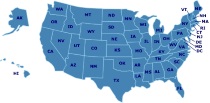
Looking for Another State?
Featured Resources
As an Amazon Associate, we earn from qualifying purchases. We get commissions for purchases made through links on this site.

Dr. Montessori's Own Handbook
A short, illustrated guide to the use of Montessori classroom materials. Describes how to set up a "children's house" - an environment for learning where children can be their own masters.

Help for the Harried Homeschooler : A Practical Guide to Balancing Your Child's Education with the Rest of Your Life
Homeschooling moms and dads can be overwhelmed by the demands on their time. Between their children’s educational needs; their roles as spouse, parent, and more; and their own individual desires and goals, these mothers and fathers struggle to accomplish all that must be done. In Help for the Harried Homeschooler, experienced homeschooler, author, and mother of four Christine Field offers sound advice for parents who want not only to achieve homeschooling success but also to reach a balanc...

Unclutter Your Home: 7 Simple Steps, 700 Tips & Ideas (Simplicity Series)
Hundreds of practical ideas for sorting, evaluating, and getting rid of all those material items that get in the way of a simplified lifestyle.

Guiding Your Catholic Preschooler
There can be no greater delight in parenting than passing on the Faith to the next generation. To help with that glorious responsibility comes Guiding Your Catholic Preschooler, a parents handbook to home-based religious instruction for the youngest members of the family. Filled with practical ideas, developmental guidelines, and a contagious enthusiasm for the treasures of the Catholic Faith, this exciting guide makes raising truly Catholic kids one of life s greatest pleasures. Recommended in ...

Kingdom of Children : Culture and Controversy in the Homeschooling Movement (Princeton Studies in Cultural Sociology)
More than one million American children are schooled by their parents. As their ranks grow, home schoolers are making headlines by winning national spelling bees and excelling at elite universities. The few studies conducted suggest that homeschooled children are academically successful and remarkably well socialized. Yet we still know little about this alternative to one of society's most fundamental institutions. Beyond a vague notion of children reading around the kitchen table, we don't know...